




 Architecture
The Living Canvas of Berlin
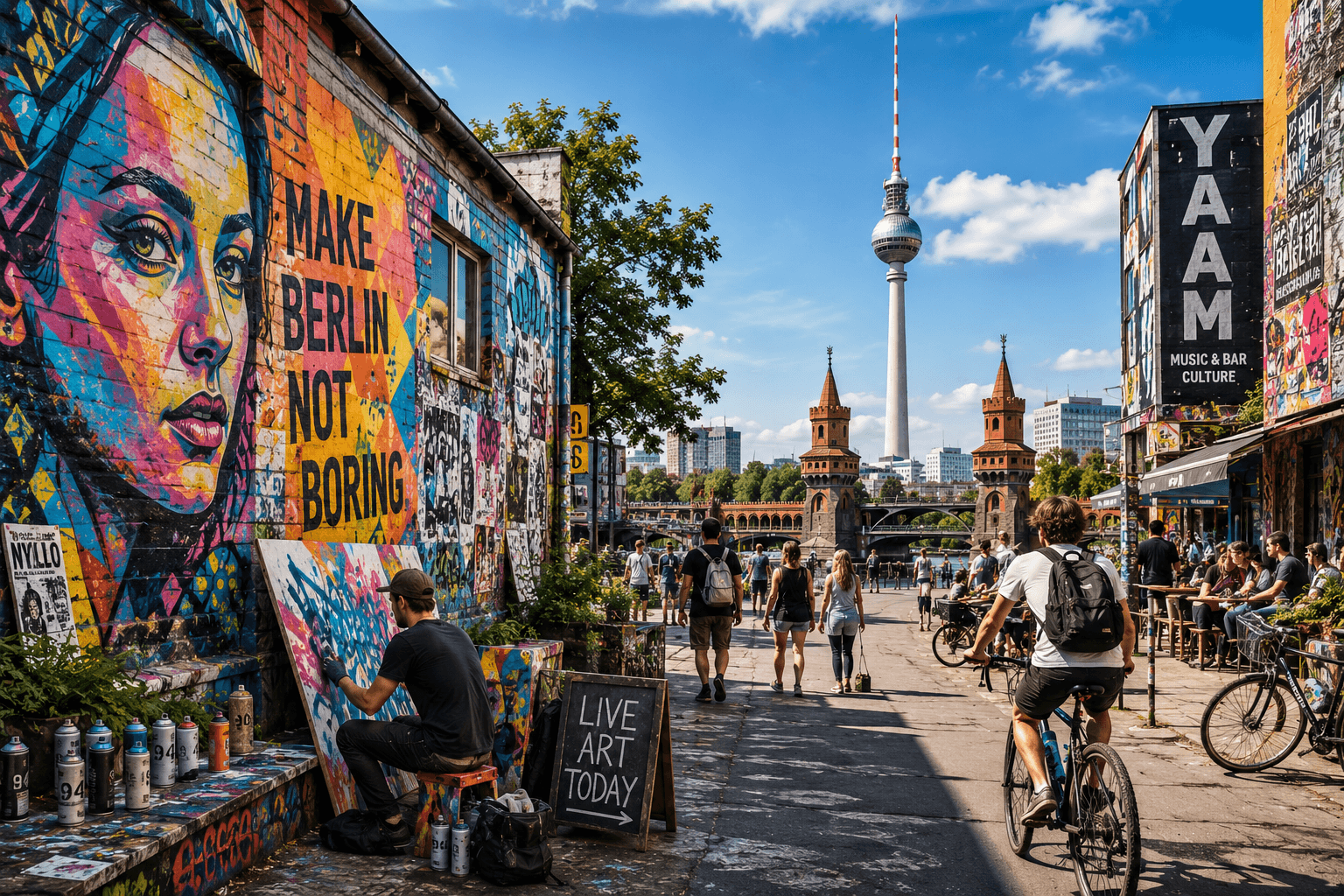
Berlin acts as a massive concrete diary. Every scarred wall tells tales of separation, defiance, and eventual unity. This breakdown hands travelers and culture seekers useful keys to the city’s wildest paint-splattered corners.
This resource serves as A Complete Guide to Berlin’s Street Art and Creative Scene, offering useful pointers for your next journey.
The creative pulse of the German capital refuses to sit quietly inside gold-framed galleries. Instead, the asphalt and brickwork host a public exhibition that costs nothing and never closes. This open-door policy draws creators and collectors from every corner of the globe.
Historical Roots of Berlin’s Urban Art
The city’s spray-painted heritage took root during the Cold War. Back then, the western flank of the Berlin Wall became a shield for political anger. Painters threw loud colors at the grim concrete barrier, turning a border of death into a monument of free speech.
To track these historic layers, you can use A Complete Guide to Berlin’s Street Art and Creative Scene to trace the evolution of these public canvases.
When the concrete fell in 1989, the East Side Gallery took shape as a lasting monument. It features 101 paintings created by 118 artists from 21 countries.
This 1.3-kilometer stretch is the longest continuous surviving section of the Berlin Wall. It remains a core pillar of local visual identity.
Strolling this path reveals brushstrokes that mirror the raw political hope of that era.
- My God, Help Me to Survive This Deadly Love by Dmitri Vrubel, depicting the famous socialist fraternal kiss between Soviet and East German leaders.
- Test the Best by Birgit Kinder, showing a classic East German Trabant car breaking through the solid concrete wall.
- The Wall Jumper by Gabriel Heimler, symbolizing the dangerous and historic quest for freedom across the militarized border.
Neighborhood Highlights: Kreuzberg, Friedrichshain, and Mitte
Kreuzberg lives as the raw, beating heart of alternative culture. Here, massive multi-story murals and quick stencils claim almost every brick facade. Walking these blocks reveals how political fury and aesthetic drive merge on local apartment blocks.
Whether you explore Kreuzberg or Friedrichshain, having A Complete Guide to Berlin’s Street Art and Creative Scene handy helps locate these hidden masterpieces.
Famous pieces like Victor Ash’s Astronaut Cosmonaut loom over the Mariannenstrasse area, standing as a quiet monument to the space race. Wandering these pavements shows why explorers rely on local expertise to find tucked-away courtyards. These secret gaps often hide the most delicate and prized stencils.
Friedrichshain brings a different, grittier energy. This is especially true inside the RAW-Gelände, a former train depot turned into a subcultural playground.
For those wandering through this industrial maze, A Complete Guide to Berlin’s Street Art and Creative Scene provides the necessary cultural context.
The brick walls here shed their skins daily. They display a shifting mix of graffiti, stickers, and paste-ups left by passing travelers.
- RAW-Gelände: A compound of historic railway buildings covered in layers of graffiti, hosting clubs, skate parks, and art studios.
- Haus Schwarzenberg: A hidden courtyard in Mitte that serves as an independent creative sanctuary with street art and galleries.
- Urban Nation Museum: A dedicated indoor museum for modern urban art located in the Schöneberg district.
Understanding the Styles and Legalities of Berlin Street Art
Berlin’s visual landscape relies on many tools beyond the standard aerosol can. Artists paste paper, glue tiles, and mount heavy objects directly onto the city walls.
Understanding these distinctions is a key component of A Complete Guide to Berlin’s Street Art and Creative Scene, helping visitors respect local laws.
Unsanctioned graffiti remains against the law. Even so, the city backs artists by providing legal walls and funding cultural zones. This delicate balance lets the underground flourish while keeping historic spots safe from harm.
The clash between commercial cash and street credibility fuels heated debates among local crews. Artists constantly argue about what constitutes real expression versus selling out.
| Art Style | Key Characteristics | Common Locations |
|---|---|---|
| Paste-ups | Paper art prepared in studios and glued to walls using wheatpaste for rapid, low-risk installation. | Mitte, Kreuzberg |
| Stencils | Detailed images spray-painted through pre-cut templates to ensure precision and speed. | Friedrichshain, Kreuzberg |
| Adbusting | Modifying corporate advertisements in public spaces to deliver satirical or political messages. | Citywide transit stations |
Core Takeaways for Your Creative Journey
Berlin’s outdoor galleries write a living diary of the city’s social battles. To truly touch this art world, you must step away from standard tourist trails. Head into the mossy courtyards and rusting industrial yards instead.
These overlooked corners offer the rawest look into the local subculture. They show a side of the city that glossy brochures ignore.
We hope A Complete Guide to Berlin’s Street Art and Creative Scene inspires you to explore the city’s open-air galleries.
A Complete Guide to Berlin’s Street Art and Creative Scene helps you plan a solid route around these neighborhoods to secure a deep connection to local creators.
The city sheds its skin overnight. Every walk reveals fresh paint and new viewpoints. This makes A Complete Guide to Berlin’s Street Art and Creative Scene a tool you will use again and again.


Comments are closed