




 Brunches in berlin
Berlin blends historical weight with modern life, a mixture reflected directly on its plates. Local tavern kitchens still focus on heavy, comforting classics that have fed working-class neighborhoods for over a century. Diving into these old-school recipes offers a direct link to the city’s gritty past.
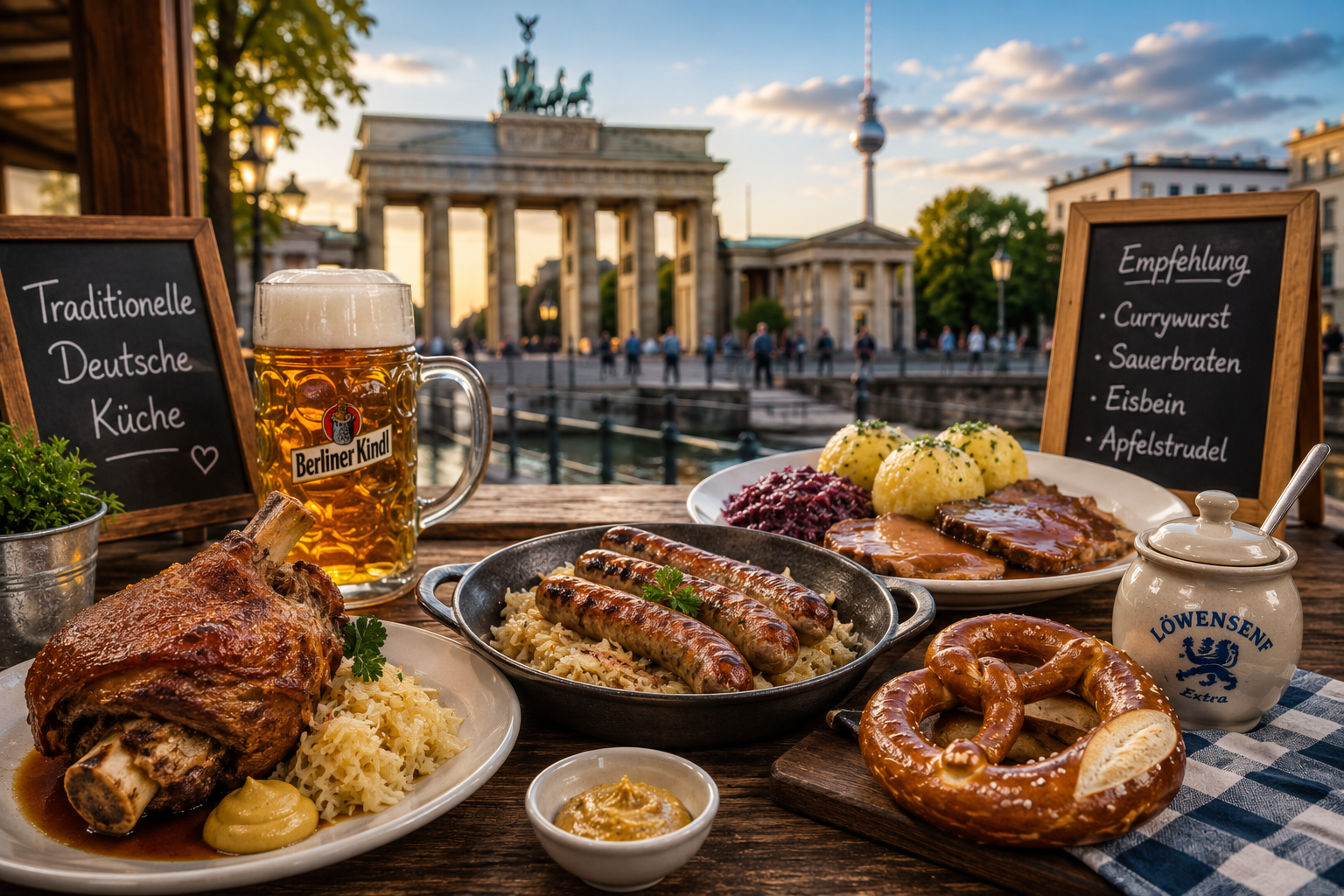
This guide highlights the absolute best Traditional German Food You Must Try in Berlin. Every bite links your palate directly to the survival stories of this city.
| Dish Name | Dish Type | Key Ingredients |
|---|---|---|
| Currywurst | Street Food | Pork sausage, spiced ketchup, curry powder |
| Eisbein | Hearty Classic | Cured pork knuckle, sauerkraut, pease pudding |
| Königsberger Klopse | Traditional Main | Minced meat, creamy caper sauce, beetroot |
| Senfeier | Comfort Food | Boiled eggs, velvety mustard sauce, potatoes |
Classic Berlin Dishes and Local Specialties
Berlin’s Legendary Street Food Classic
Herta Heuwer invented the Currywurst in 1949, turning a simple post-war snack into a national obsession. The dish features a steamed, then fried pork sausage, sliced thick and drowned in a spiced ketchup sauce dusted with curry powder. It remains a quick, greasy masterpiece of local fast food.
Berliners devour over 70 million portions of this quick meal every single year. When hunting down Traditional German Food You Must Try in Berlin, this humble sausage represents the easiest starting point. You will find it on almost every corner.
Every street corner kiosk guards its proprietary sauce recipe, often handed down through decades. It is typically served with crispy fries or a simple bread roll known locally in Berlin as a Schrippe.
The Hearty Pork Knuckle
Eisbein stands as a classic centerpiece of Prussian home cooking. It consists of a cured pork knuckle simmered for hours until the meat slips off the bone. A thick layer of rich fat surrounds the meat, keeping it exceptionally tender.
A mountain of sour sauerkraut and a dollop of yellow split pea puree accompany the meat. Ordering this pork knuckle is a major highlight when seeking out Traditional German Food You Must Try in Berlin, especially inside dark wood tavern rooms like Zur Letzten Instanz.
The cured meat tastes heavy and salty, cut sharply by the sourness of the fermented cabbage. This dense plate delivers enough calories to power a traveler through a freezing winter afternoon.
Savory Meatballs in Caper Sauce
Königsberger Klopse are tender boiled meatballs made from a mixture of minced veal, beef, and pork. Chefs fold breadcrumbs, onions, and salted anchovies directly into the meat before cooking. The signature element is a white cream sauce spiked with lemon juice and salty capers.
The marriage of savory meat and sharp capers has kept this plate popular for centuries. If you want true Traditional German Food You Must Try in Berlin, look no further than this classic.
Salty anchovies dissolved in the meat mixture supply an earthy depth without adding any fishy notes. Historic taverns serve these meatballs with simple boiled potatoes and bright red pickled beetroot.
Comforting Mustard Eggs
Senfeier, known as mustard eggs, is a cheap, homey dish that brings back childhood memories for many locals. The meal features simple boiled eggs bathed in a warm, smooth mustard sauce.
Mashed or boiled potatoes sit on the side to absorb every drop of the yellow gravy. For travelers seeking home-style Traditional German Food You Must Try in Berlin, this recipe offers a glimpse into everyday family kitchens.
Heavy cream and a pinch of sugar soften the sharp mustard kick, making the sauce warm and smooth. This comforting plate offers a rare meat-free option in a local dining scene dominated by pork.
Classic Side Dishes to Complete Your Meal
No main course in this city feels complete without the right side dishes. These small plates balance out the greasy pork joints and thick gravies.
Matching these sides to your main meal completes the picture of Traditional German Food You Must Try in Berlin. Choosing your sides wisely helps you appreciate the slow-cooked nature of regional recipes.
Order these classic sides alongside your main plates.
- Sauerkraut: Fermented cabbage that cuts through heavy meats with its sharp, sour crunch.
- Kartoffelpüree: Smooth mashed potatoes whipped with butter and a hint of nutmeg.
- Rotkohl: Dark red cabbage slow-cooked with apples and warm spices.
- Salzkartoffeln: Salted boiled potatoes designed to soak up thick gravies.
- Erbsenpüree: Thick yellow pea puree that sits heavily next to rich pork cuts.
Local Tips for Your Dining Walks
Eating at old-school taverns requires a bit of local know-how. These historic beer halls still run on unwritten rules that differ from modern hipster cafes.
Remember these simple rules before you sit down.
- Cash is King: Old-school taverns frequently reject plastic, so keep paper Euros on hand.
- Make Reservations: Legendary spots like Zur Letzten Instanz book out days ahead of time.
- Tipping Etiquette: Round up your bill by ten percent and hand the cash straight to your server.
- Shared Tables: Crowded beer halls mean squeezing onto long benches next to total strangers.
Traditional Drinks to Pair with Your Meal
To handle these massive plates, you need the right local drinks to wash them down. The regional brewing culture matches the heavy plates perfectly.
Exploring these pairings is a vital part of tasting Traditional German Food You Must Try in Berlin. Look out for these local drinks on the menu.
- Berliner Weisse: A tart wheat beer served green with woodruff syrup or red with raspberry syrup.
- Pilsner: A bitter, clean golden lager that cuts right through heavy pork grease.
- Berliner Luft: A sweet peppermint shot served to settle your stomach after a heavy dinner.
Final Thoughts on Berlin’s Culinary Heritage
Eating like a local reveals the city’s blue-collar history. From cheap plastic curbside tables to candlelit wood cabins, the food speaks of survival and comfort.
Hunting down Traditional German Food You Must Try in Berlin will make your trip far richer. Map out your walks around these old-school taverns to see the city through its historical plates.


Comments are closed