


 Berlin Neighbourhoods
Understanding Berlin’s Particular Urban Layout
Berlin shifts constantly, shaped by a fractured past. This metropolis does not have a single center like Paris or London. Instead, it functions as a loose network of distinct neighborhoods, each holding its own subculture and architectural flavor.
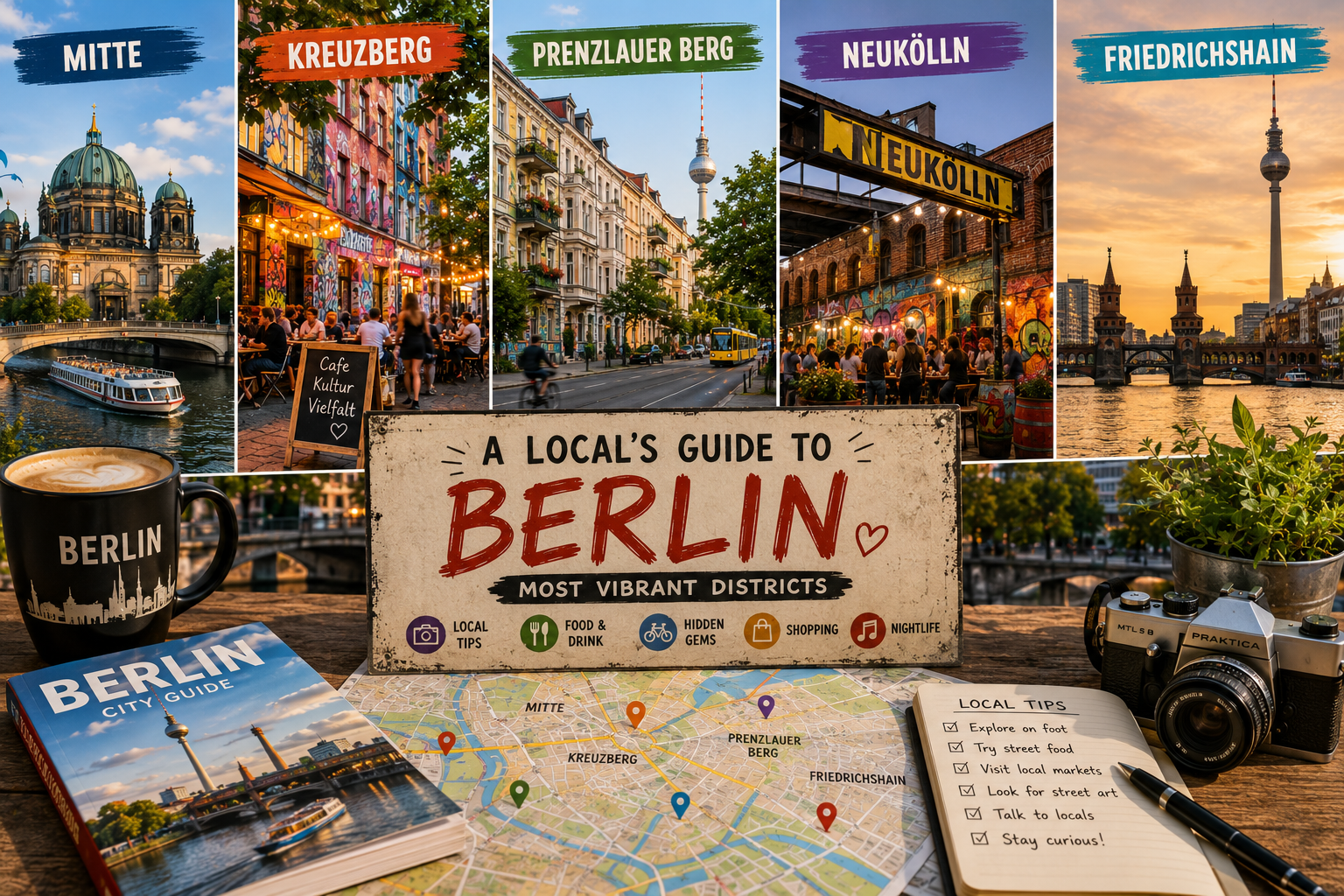
Whether visiting for the first time or returning to explore deeper, A Local’s Guide to Berlin’s Most Vibrant Districts helps map out this complex urban geography.
Wandering through these quarters lets you step off the beaten track. You get to feel the true pulse of daily life.
By consulting A Local’s Guide to Berlin’s Most Vibrant Districts, you easily sidestep crowded tourist hubs and dive into genuine local culture. This neighborhood manual offers direct observations, historical context, and concrete tips for the most fascinating corners of the city.
Kreuzberg: The Heart of Rebellion
Kreuzberg remains the historic core of alternative culture and punk rock. Split by old postal codes, SO36 and 61, the area still holds a defiant attitude visible in graffiti and neighborhood-run gardens.
When drafting A Local’s Guide to Berlin’s Most Vibrant Districts, this district always ranks high because of its artistic spark and political grit.
Kottbusser Tor serves up a rush of sounds and smells, fueled by bustling Turkish markets and constant movement. Nearby, the shaded banks of the Landwehr Canal offer a quiet retreat where residents meet at dusk. Victoria Park boasts the highest natural point in the inner city, complete with an artificial mountain waterfall.
Travelers wanting a taste of real life here should seek out these specific landmarks:
- Markthalle Neun: A historic covered market hosting weekly street food nights filled with regional delicacies.
- SO36: A legendary music hall that once hosted music icons like Iggy Pop and David Bowie.
- Gorlitzer Park: A wide green field acting as a central social lawn for local residents.
Friedrichshain: Industrial Ruins and Club Culture
Friedrichshain fuses old factory structures with world-famous electronic music. Bordered by the Spree River, it showcases grand Soviet-era buildings along Karl-Marx-Allee.
Nightlife fans regularly read A Local’s Guide to Berlin’s Most Vibrant Districts to locate the top clubbing spots and music hubs here.
The East Side Gallery stands out here, featuring a 1. 3-kilometer-long stretch of the original Berlin Wall painted with political murals. Boxhagener Platz acts as the local anchor.
It hosts an organic food market on Saturdays and a busy flea market on Sundays.
Side streets are packed with tiny boutiques and vegan eateries. Look out for these specific local hubs:
- RAW-Gelande: An old train depot turned into an alternative culture yard with climbing walls, clubs, and galleries.
- Simon-Dach-Strasse: A lively strip crowded with sidewalk cafes, bars, and global dining spots.
- Volkspark Friedrichshain: The oldest public park in the city, boasting quiet ponds and an outdoor cinema.
Neukölln: Global Flavors and Backyard Art
Neukölln changed from an ignored border zone into a bustling artistic hotspot. It draws a mix of international students, creators, and established immigrant families.
No edition of A Local’s Guide to Berlin’s Most Vibrant Districts would be complete without highlighting Neukölln and its global food scene.
The northern quarter, known as Schillerkiez, sits next to the immense green space of Tempelhofer Feld. This closed airfield offers wide asphalt runways for cycling, skating, and urban gardening plots. Weserstrasse operates as the main strip for evening drinks, packed with vintage shops and cozy bars.
Top spots to explore include:
- Tempelhofer Feld: A historic former airfield that now serves as the largest public park in the city.
- Richardplatz: The historic core of Bohemian Rixdorf, featuring an 18th-century blacksmith shop and village feel.
- Kanalufer: The quiet canal paths along Maybachufer, known for its twice-weekly Turkish market.
Prenzlauer Berg: Restored Streets and Leafy Courtyards
Prenzlauer Berg stands in stark contrast to the raw spirit of the south. Once a home for East German rebels, the neighborhood changed rapidly after the wall fell and now draws many young families.
Parents and coffee lovers rely on A Local’s Guide to Berlin’s Most Vibrant Districts to locate the quietest, tree-lined streets of this district.
The area features nicely repaired pre-war buildings, cobbled lanes, and clean squares. Kollwitzplatz sits at the center of this wealthy district, hosting a popular gourmet market every Saturday. Rykestrasse holds the largest synagogue in the country, which escaped demolition during the Second World War.
Well-known spots in this neighborhood include:
- Mauerpark: Famous for its massive Sunday flea market and the outdoor karaoke sessions at the stone amphitheater.
- Kulturbrauerei: A massive brick brewery complex converted into movie theaters, stages, and galleries.
- Oderberger Strasse: A picturesque street lined with boutiques, ice cream shops, and historic bathhouses.
Wedding: Raw Industrial Spirit and Local Roots
Wedding preserves an honest, industrial feel untouched by tourist crowds. This neighborhood offers a window into old-school local life blended with a fresh art community.
Evolving areas like Wedding now feature prominently in A Local’s Guide to Berlin’s Most Vibrant Districts as creative minds search for cheap workspaces.
The Panke River curls through the area, offering quiet walking trails past old brick workshops and art studios. Leopoldplatz functions as the main square, hosting local events and weekend markets. The neighborhood also hides great craft breweries set up inside former manufacturing buildings.
Notable spots in Wedding include:
- Humboldthain Park: Holds a rose garden, a public swimming pool, and a giant concrete flak tower with views over the rooftops.
- Silent Green Kulturquartier: Arts venue built inside a historic former crematorium.
- Eschenbrau: A pioneer local craft brewery hidden inside a residential courtyard.
At-a-Glance: Berlin’s Districts Compared
Use this quick layout to compare the different vibes and main attractions across these distinct neighborhoods.
| District | Primary Vibe | Must-Visit Highlight |
|---|---|---|
| Kreuzberg | Alternative and Rebellious | Markthalle Neun |
| Friedrichshain | Industrial and Club-focused | East Side Gallery |
| Neukölln | Multicultural and Creative | Tempelhofer Feld |
| Prenzlauer Berg | Restored and Family-friendly | Mauerpark |
| Wedding | Down-to-earth and Industrial | Humboldthain Park |
How to Navigate Berlin’s Distinct Neighborhoods
Where you spend your time depends on your own interests and speed. Traveling across town is simple because of the dense network of subways, elevated trains, and trams. Most major neighborhoods sit less than twenty minutes from the central train station.
Since each neighborhood feels different, where you stay shapes your trip. Clubgoers usually head to Friedrichshain, while those wanting quiet morning strolls choose Prenzlauer Berg. The wide variety of areas makes sure every traveler finds the right spot.
Useful Tips for Exploring
Berlin shines when you slow down and wander the streets on foot or on a bike. Consulting A Local’s Guide to Berlin’s Most Vibrant Districts helps you connect with the real rhythm of local life. Every area tells its own story of survival, reconstruction, and creative freedom.
To get the most out of your trip, focus on three simple approaches. First, give a whole day to a single neighborhood instead of racing between far-off landmarks.
Second, take advantage of the transit lines to cross between the eastern and western halves of the city. Third, spend your money at independent shops, food stalls, and community galleries during your visit.


Comments are closed